
Seafarer Welfare · Regulations
What Is the Maritime Labour Convention (MLC 2006)? Complete Guide
Virtual Maritime Academy · November 10, 2026
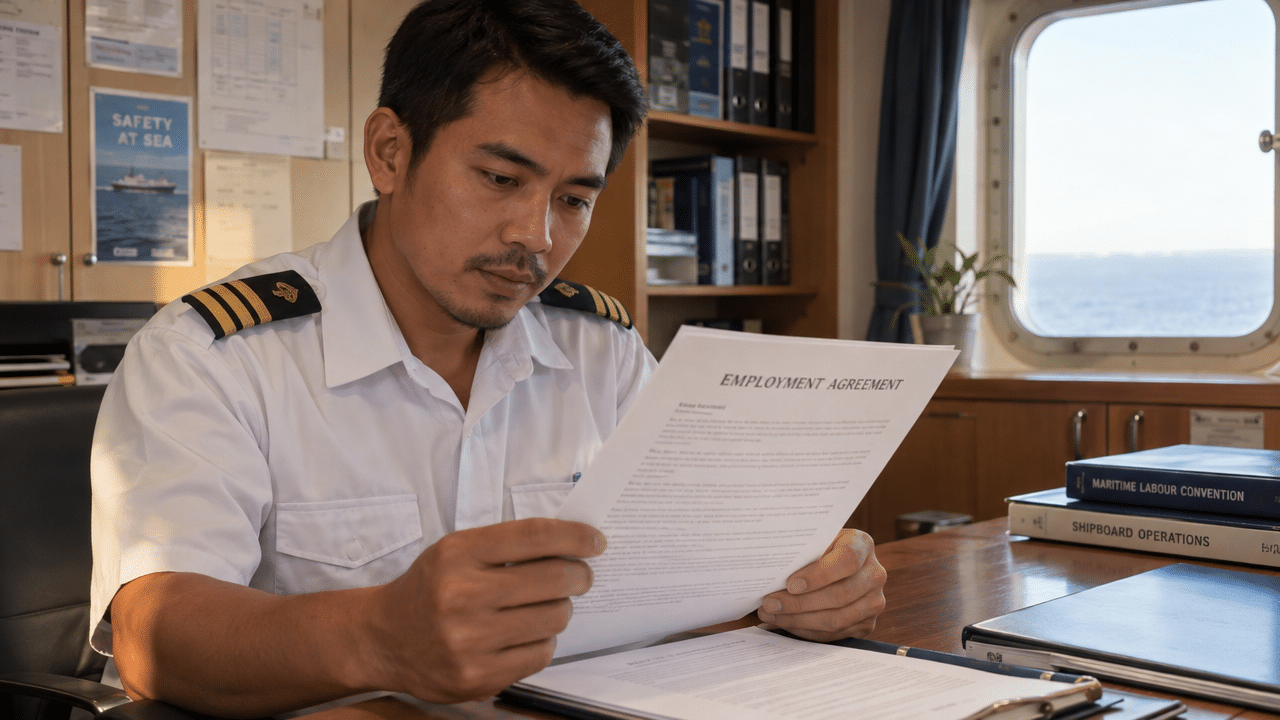
If you have spent any time around crewing departments, P&I correspondents, or port state control circulars, you have probably run into the question of what is MLC 2006 and why it carries so much weight across the shipping industry. The Maritime Labour Convention, 2006 sets out the baseline working and living conditions that seafarers on almost every commercial ship are entitled to, and it has become the single document that crewing managers, masters, and auditors reach for when a dispute arises about pay, rest, or onboard welfare. Understanding it is no longer optional for anyone who signs seafarer contracts, flags a vessel, or sails on one.
What Is MLC 2006 and Why Was It Created?
The Maritime Labour Convention was adopted by the International Labour Organization in 2006 and entered into force in 2013. The ILO built it after years of work consolidating nearly seventy older maritime labour instruments, some dating back to the early twentieth century, into one coherent rulebook. Shipping is a global industry with a workforce that rarely stays in one jurisdiction long enough for a single country’s labour law to govern it properly, so the ILO set out to create a universal floor that would apply regardless of where a ship was flagged or where its owner was based.
People in the industry often call it the seafarers’ bill of rights, and that nickname is earned. The convention sits alongside the IMO’s own instruments, SOLAS for safety, MARPOL for pollution prevention, and STCW for training and certification, as the fourth pillar of modern maritime regulation. Where those IMO conventions protect the ship, the cargo, and the environment, MLC 2006 protects the person doing the work. That distinction matters because before 2006 a seafarer’s wages, rest hours, and repatriation rights could vary enormously depending on which flag a ship happened to fly, and enforcement was inconsistent at best.
Who Does the Convention Apply To?
MLC 2006 applies to all ships that are ordinarily engaged in commercial activities, with a few narrow exceptions for fishing vessels, traditionally built ships like dhows and junks, warships, and naval auxiliaries. In practice that means it covers the vast majority of the merchant fleet: container ships, bulk carriers, tankers, cruise ships, offshore support vessels, and general cargo ships, whether they trade internationally or domestically once they are above a certain tonnage threshold set by each flag state.
Flag states that have ratified the convention are obligated to inspect and certify ships flying their flag, and this is where the convention gets its real enforcement teeth. A ship over 500 gross tonnage engaged in international voyages or voyages between foreign ports must carry a Maritime Labour Certificate, issued after a flag state or recognized organization inspection confirms the vessel meets the required standards. Port states that have ratified MLC 2006 can also inspect foreign-flagged vessels calling at their ports, so registering under a convenient flag does not shield an owner from scrutiny once a vessel starts trading internationally.
The Core Protections: Employment, Hours of Work, and Rest
At the heart of the convention is the seafarer employment agreement, a document every crew member must sign before joining a vessel. It has to spell out wages, leave entitlement, termination notice, repatriation terms, and the social security coverage the seafarer is entitled to. Recruitment and placement agencies that supply crew are themselves subject to MLC requirements, which closes off a loophole that used to let manning agents operate with little accountability for how seafarers were treated once they boarded.
Hours of work and rest get particularly close attention because fatigue has been linked to a disproportionate share of maritime casualties. The convention sets two alternative standards that flag states choose between: a maximum of fourteen hours of work in any twenty-four-hour period and seventy-two hours in any seven-day period, or a minimum of ten hours of rest in any twenty-four-hour period and seventy-seven hours in any seven-day period. Records of actual hours worked and rested must be kept and made available to inspectors, and falsifying them is treated as a serious compliance breach rather than a paperwork error.
- A written employment agreement signed before or at the point of engagement
- Defined limits on hours of work, with mandatory rest periods tracked daily
- Paid annual leave of at least 2.5 calendar days per month of employment
- Repatriation at no cost to the seafarer when a contract ends or is terminated early
Accommodation, Health, and Welfare on Board
Living conditions aboard are regulated in detail that surprises people who have never worked in crewing. The convention sets minimum requirements for cabin size, ventilation, heating, lighting, and noise levels, and it mandates recreational facilities, mess rooms, and sanitary spaces appropriate to the number of crew carried. Ships built or substantially reconstructed after the convention’s entry into force must meet these accommodation standards from the design stage, which has reshaped how newbuild specifications are drawn up at shipyards.
Medical care is another area the convention treats seriously. Ships must carry a medical chest appropriate to their size and trading pattern, and larger vessels are required to carry a qualified medical officer or ensure rapid access to shore-based medical advice. Food and catering standards are covered too, down to the qualification of the ship’s cook, since diet affects crew health and performance over long contracts. Welfare extends beyond the physical, with provisions for shore leave, communication with family, and protection against harassment on board.
How Compliance Is Verified: The DMLC and Inspections
Verification runs through a two-part Declaration of Maritime Labour Compliance, usually shortened to DMLC. Part I is drawn up by the flag state and lists the national requirements implementing the convention’s fourteen areas, from minimum age to onboard medical care. Part II is completed by the shipowner and describes the specific measures the ship has in place to meet those requirements between inspections, such as who is responsible for monitoring rest hours or how grievances get handled. Together with the Maritime Labour Certificate, the DMLC has to be posted in a conspicuous place on board and made available to the crew, inspectors, and port state control officers on request.
Ongoing compliance is checked through periodic flag state audits, usually every five years with an intermediate inspection, and through port state control inspections whenever the ship calls at a port in a ratifying country. A ship found with serious deficiencies, such as unpaid wages or systemic rest hour violations, can be detained until the problems are corrected, and these detentions are now tracked and published much like detentions under SOLAS or MARPOL. Shipowners also carry an internal obligation to run onboard complaint procedures, so issues can surface and get resolved before they reach an external inspector.
Where to Get Trained in MLC 2006 Compliance and Auditing
Knowing the convention exists is one thing; being able to apply it as a DPA, superintendent, auditor, or ship’s officer is another. Crewing managers need to draft compliant employment agreements and track rest hours correctly. Internal auditors and designated persons ashore need to know how to prepare a DMLC Part II that will hold up under a flag state audit rather than one that reads well but falls apart the first time an inspector asks for supporting records. Masters and officers need enough working knowledge to manage the ship’s own compliance day to day, since they are the ones signing off on hours of work records and fielding crew concerns before they escalate.
Virtual Maritime Academy’s MLC Lead Internal Auditor course, built around ISO 19011 auditing principles, is designed for exactly this gap. It walks through each of the convention’s fourteen areas, how a DMLC should be structured, and how to plan and conduct an internal audit that produces findings a flag state or port state inspector will actually respect. For anyone responsible for crew welfare compliance, whether at the fleet management level or on board, that kind of structured training turns the convention from a document you have heard of into a framework you can apply with confidence.
Ready to build real expertise in MLC 2006 compliance? Explore the MLC Lead Internal Auditor Course at Virtual Maritime Academy.
Explore the full range of maritime courses at Académie Maritime Virtuelle (VMA).
À Propos de Nous
Virtual Maritime Academy is a global leader in online maritime education and training, offering courses designed to meet the evolving needs of the shipping industry. As a DNV Certified Maritime Training Provider with CPD accreditation, we deliver cutting-edge programs that prepare seafarers and maritime professionals for today’s and tomorrow’s challenges. 🌊⚓