
Maritime Security · Regulations
What Is the ISPS Code? A Complete Guide to Maritime Security
Virtual Maritime Academy · November 9, 2026
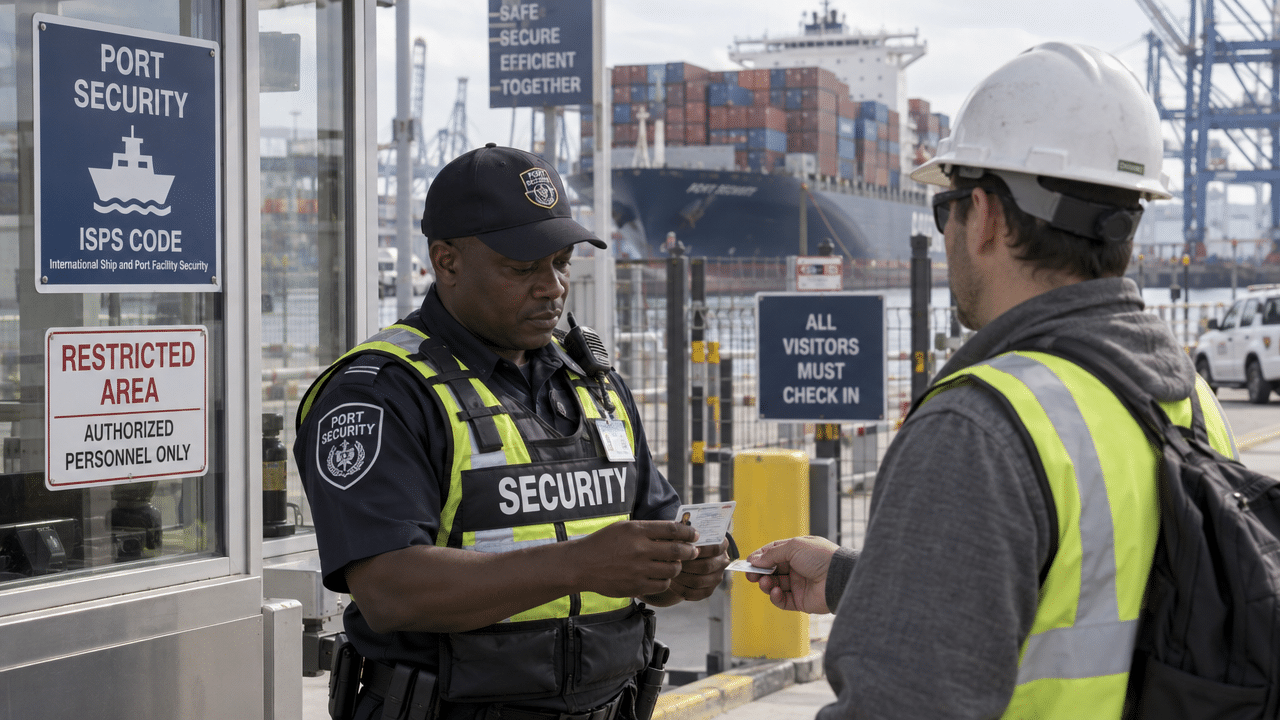
Ask five people in the maritime industry what is the ISPS code and you will likely get five different answers, ranging from “a security checklist” to “that IMO thing from after 9/11” to a blank stare. The International Ship and Port Facility Security Code is binding law for most of the world’s commercial fleet and the port facilities that serve it, yet outside security officer circles the details often stay fuzzy. This guide walks through where the Code came from, who has to comply with it, the roles it creates, and the planning it demands, whether you run a shipping company, manage a terminal, or simply want to understand the security framework governing the ship you sail on.
What Is the ISPS Code? Origins in a Post-9/11 Maritime World
The ISPS Code did not come out of years of quiet technical study by naval architects or classification societies. It emerged from the political and security shockwaves that followed the September 11, 2001 attacks in the United States. Governments around the world started asking a question nobody had pressed very hard before: what if a vessel, a port, or the cargo moving through either became the next vector for a mass-casualty attack. Container ships, cruise liners, and oil terminals suddenly looked less like ordinary transport infrastructure and more like potential targets or delivery mechanisms for something far worse.
The International Maritime Organization responded quickly by its own standards. Member states adopted the Code in December 2002 as an amendment to the Safety of Life at Sea (SOLAS) Convention, and it entered into force on July 1, 2004, a remarkably short timeline for an international treaty instrument. The Code is split into two parts: Part A sets out the mandatory requirements that every covered ship, company, and port facility must follow, while Part B offers guidance on how to meet those requirements in practice. Together they turned maritime security from something individual operators handled informally into a structured, auditable system with government oversight on both ends of a voyage.
Who the Code Applies To: Ships, Companies, and Port Facilities
The Code’s reach is broader than many people assume. It covers passenger ships, including high-speed passenger craft, on international voyages; cargo ships of 500 gross tonnage and above on international voyages; mobile offshore drilling units; and the port facilities that serve any of these vessel types. A coastal fishing trawler or a small domestic ferry generally falls outside its scope, but nearly every deep-sea cargo operation and every international passenger route sits squarely inside it.
Three distinct parties carry obligations under the Code, and each answers to a different piece of the puzzle. The shipping company must appoint security personnel, fund security measures, and build security into how it operates its fleet. The ship itself must carry an approved security plan, maintain security equipment, and keep records that a port state control officer can review on demand. The port facility, often the piece people forget about, carries its own parallel obligations: assessing its vulnerabilities, controlling who and what moves through its gates, and coordinating with every ship that calls there. A tanker can run a flawless security program and still be let down by a terminal that never bothered with its own assessment, which is why the Code regulates both sides of the ship-shore interface.
The Three Roles That Keep the Code Running: CSO, SSO, and PFSO
Three designated roles do the actual work of implementing the Code, and anyone trying to understand how maritime security operates day to day needs to know what each one does.
The Company Security Officer (CSO) sits at the shipping company level, usually ashore, and oversees security across the entire fleet. This person conducts or commissions ship security assessments, develops and keeps the security plan current, arranges internal audits, and acts as the main point of contact with government authorities and port facilities on security matters. One CSO can be responsible for several vessels at once, which makes the role less about hands-on deck work and more about policy, oversight, and coordination.
The Ship Security Officer (SSO) works aboard the vessel itself, reporting to the master, and handles the practical, moment-to-moment side of security. The SSO conducts regular inspections to confirm security measures are being followed, trains and drills the crew, reports deficiencies to the CSO, and manages the day-to-day implementation of the ship’s security plan while the vessel is underway or in port.
The Port Facility Security Officer (PFSO) mirrors the SSO’s job on land. This person develops and implements the port facility’s own security plan, carries out the facility’s security assessment, liaises with ship security officers calling at the port, and coordinates with local law enforcement and government agencies. Where the SSO’s world is a single ship, the PFSO’s world is an entire terminal, with multiple vessels, hundreds of workers, and cargo moving through at the same time.
Core Requirements: Security Levels, Plans, and Assessments
Underneath the roles sits the actual machinery of compliance, and three elements do most of the work.
Security levels set the baseline tension for the whole system. Level 1 is the normal, everyday minimum that applies at all times. Level 2 applies when there is a heightened risk of a security incident, prompting additional measures such as increased patrols or restricted access. Level 3 is reserved for situations where an incident is probable or imminent, triggering the most intensive measures a ship or facility can put in place. Governments set the level for their own waters and ports, and ships adjust their procedures to match whatever level applies wherever they happen to be operating.
Security assessments come first in sequence, even though they sound less exciting than plans. A proper assessment identifies assets worth protecting, evaluates threats and vulnerabilities, and ranks the risks that the eventual plan needs to address. Skipping or rushing this step tends to produce a plan that looks thorough on paper but misses the vulnerabilities that actually matter on that particular ship or at that particular terminal.
Security plans translate the assessment into action. A Ship Security Plan or Port Facility Security Plan spells out procedures for each security level, access control measures, how to handle security threats or breaches, communication protocols, and the equipment needed to carry all of it out. Flag states or recognized security organizations review and approve these plans, and ships carry an International Ship Security Certificate as evidence that an approved plan is in place and has been verified through audit.
A few other obligations tie the system together and come up constantly in practice:
- Declarations of Security between a ship and a port facility, or between two ships, when the risk level calls for formally documenting shared security responsibilities
- Continuous Synopsis Records that track a ship’s history, including its flag, ownership, and classification society
- Ship Security Alert Systems that let a crew raise a covert distress signal if the vessel is under threat
- Scheduled training and drills so the crew and port workers can actually execute the plan rather than simply keep it on file
Where to Learn More and Get Certified for an ISPS Role
None of this works without people who actually understand it, which is why dedicated certification exists for each of the three key roles. Training for the CSO role covers company-level obligations, plan development, and audit procedures. SSO training focuses on shipboard implementation, drills, and the officer’s day-to-day responsibilities to the master and the company. PFSO training addresses the shore side of the equation: facility assessments, access control systems, and coordination with visiting ships and port authorities.
If you are a deck officer, a shore-based manager, or a terminal operator trying to work out which path fits your job, Virtual Maritime Academy runs ISPS-focused courses built around these exact roles, delivered online for working professionals who cannot step away from their job for a week-long classroom course. Each course covers the regulatory background in far more depth, paired with the practical documentation and assessment skills needed to sit for certification and take on a CSO, SSO, or PFSO role with genuine confidence.
Ready to go deeper into ISPS Code compliance and security roles? Explore VMA’s ISPS-related courses at Virtual Maritime Academy.
Explore the full range of maritime courses at Virtual Maritime Academy.
About Virtual Maritime Academy
Virtual Maritime Academy is a global leader in online maritime education and training, offering courses designed to meet the evolving needs of the shipping industry. As a DNV Certified Maritime Training Provider with CPD accreditation, we deliver cutting-edge programs that prepare seafarers and maritime professionals for today’s and tomorrow’s challenges. 🌊⚓