
Careers · Professional Development
How to Transition from Sea to Shore: Maritime Career Opportunities
Virtual Maritime Academy · November 21, 2026
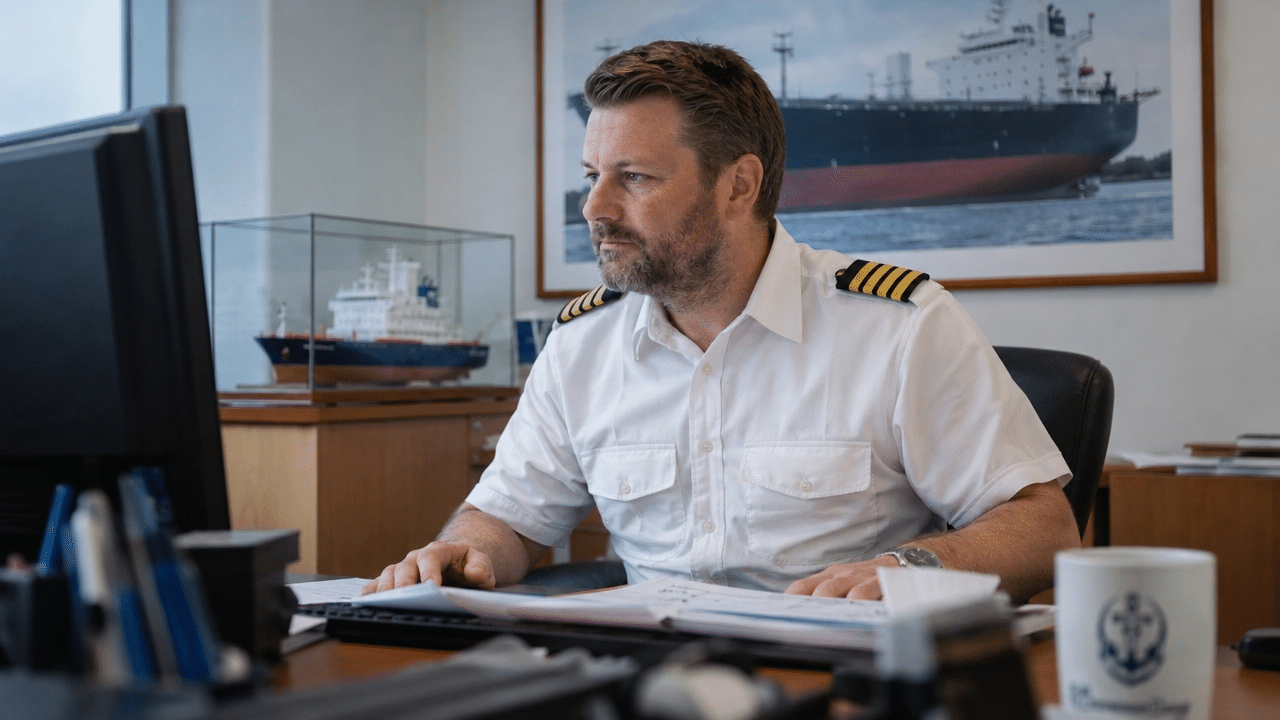
Every year a steady stream of chief officers, chief engineers, and masters start asking the same question around the midpoint of their careers: is it time to come ashore? The transition from sea to shore is rarely a single decision made overnight. It tends to build gradually, shaped by family milestones, the physical wear of years on watch, or simply a growing pull toward roles where sea experience becomes the foundation for something new rather than the whole job. This article looks at why that shift happens, which shore roles value a mariner’s background most, what training closes the gap, and how to plan the move without walking away from the career you already have.
Why Experienced Seafarers Increasingly Move Ashore
After a decade or two of rotating contracts, the arithmetic of sea life starts to change. Time away from children stops being an abstraction and becomes a list of birthdays and school events missed. Watchkeeping, broken sleep patterns, and the general physical demands of shipboard work accumulate in ways that are easy to dismiss at thirty and much harder to ignore at fifty. For many officers the decision to look shoreward is less about disliking the sea and more about wanting a life that fits around a family rather than around a sailing schedule.
There is also a structural pull from the shore side itself. Shipping companies, classification societies, flag administrations, and port authorities are short of people who actually understand what happens on a bridge or in an engine room during an incident, not just what the regulation says should happen. That gap between paper knowledge and practical experience has widened as fleets have grown more complex, and it has made genuine sea time one of the more valuable qualifications a shore-side candidate can offer.
Shore-Side Roles That Value Sea Experience
Several shore positions exist almost specifically for people who have already done the job at sea rather than studied it from a classroom. The list below covers the roles that come up most often when sailing officers start exploring shore careers.
- Designated Person Ashore (DPA). The DPA is the ISM Code’s direct link between ship and company management, responsible for monitoring safety and pollution-prevention performance and acting as the person a crew can escalate concerns to without going through the normal chain of command. Companies almost always prefer a DPA who has actually run a safety management system from the ship’s side.
- Company Security Officer (CSO). Working under the ISPS Code, the CSO develops and maintains the ship security assessment and plan across a fleet, liaises with port facility security officers, and coordinates the company’s response to security incidents. A background commanding or officering vessels through varied port states is a natural fit.
- Port Facility Security Officer (PFSO). On the shore side of the same code, the PFSO manages security for a terminal or port facility, carries out drills, and liaises with CSOs and local authorities. Former deck officers who understand how ships actually interact with a berth tend to grasp the operational side of this role quickly.
- Marine Superintendent. Superintendents oversee technical and operational matters for a group of vessels, from dry-docking and maintenance planning to vetting inspections and incident response. This is one of the most direct paths from the bridge or engine room to a shore desk, since the work is essentially the same decision-making applied across several ships instead of one.
- Auditor. Internal and external auditors for ISM, ISPS, MLC, and ISO management systems need a working understanding of how shipboard operations actually run in order to tell a genuine nonconformity from paperwork noise. Certification bodies and shipowners alike recruit heavily from the ranks of former seafarers for this reason.
- Trainer or Assessor. Maritime training providers and in-house company academies need instructors who can speak credibly about the realities of shipboard work, not just recite a syllabus. Officers who have mentored cadets or run safety drills at sea often move into this kind of role with little friction.
Training and Certification That Bridge the Gap
Sea experience opens the door to these roles, but it rarely walks through it alone. Most companies and certification bodies expect a formal qualification that demonstrates the candidate understands the regulatory and administrative side of the job, not only the operational side they already know cold. A DPA or CSO candidate, for instance, benefits enormously from a structured ISM/ISPS management course that covers audit preparation, documentation requirements, and incident reporting obligations in detail, since those are the parts of the job that differ most from life on board.
Auditor roles typically require a recognized lead auditor qualification covering ISO 9001, ISM, or ISO 45001, depending on the sector, along with evidence of audit practice under supervision before working independently. Trainers benefit from a train-the-trainer or assessor certificate that covers adult learning principles and assessment design, skills that do not come automatically with years of command experience. None of these courses replace sea time; they translate it into a form that a shore employer can verify and rely on.
Planning Your Transition from Sea to Shore While Still Sailing
The officers who make this move cleanly almost always start preparing years before they stop sailing, using contract leave and off-watch hours to build the paperwork and network a shore role will ask for. Waiting until the last contract to think about any of this puts a candidate at a real disadvantage against people who planned ahead.
- Map two or three target roles early and read their actual job postings, not just the title, to see which certificates and experience they list as requirements.
- Use shore leave between contracts to complete online courses rather than treating that time purely as rest, since distance learning fits around a sailing schedule in a way classroom study does not.
- Start documenting incidents, audits, drills, and management-system work handled on board, since this becomes the evidence base for a CV and for interview answers later.
- Build contacts ashore deliberately, through superintendents, DPAs, and auditors encountered during port state inspections, vetting visits, or company audits, rather than waiting until actively job hunting to make those connections.
- Time the final contract so there is a gap of at least a few weeks before starting a shore role, since the adjustment from shipboard routine to office routine takes longer than most people expect.
Where to Start
For most sailing officers, the practical starting point is a single targeted course rather than an entire career overhaul attempted at once. Picking the certificate that matches the first shore role on the shortlist, whether that is an ISM/ISPS management course for a DPA or CSO track, an auditor qualification, or a trainer and assessor certificate, gives a concrete deadline and a concrete outcome to work toward during the next rotation.
Once that first qualification is in hand, the rest of the plan tends to fall into place faster than expected, because a certificate plus genuine sea experience is exactly the combination shore-side employers say they struggle to find. The hardest part of this move is usually just deciding to start it while still under contract, rather than waiting for the sea career to end on its own.
Ready to start building your shore-side training record? Browse VMA’s full course catalogue at Virtual Maritime Academy.
Explore the full range of maritime courses at Virtual Maritime Academy.
About Virtual Maritime Academy
Virtual Maritime Academy is a global leader in online maritime education and training, offering courses designed to meet the evolving needs of the shipping industry. As a DNV Certified Maritime Training Provider with CPD accreditation, we deliver cutting-edge programs that prepare seafarers and maritime professionals for today’s and tomorrow’s challenges. 🌊⚓